What Healthcare Brands Are Prioritizing in Provider Education
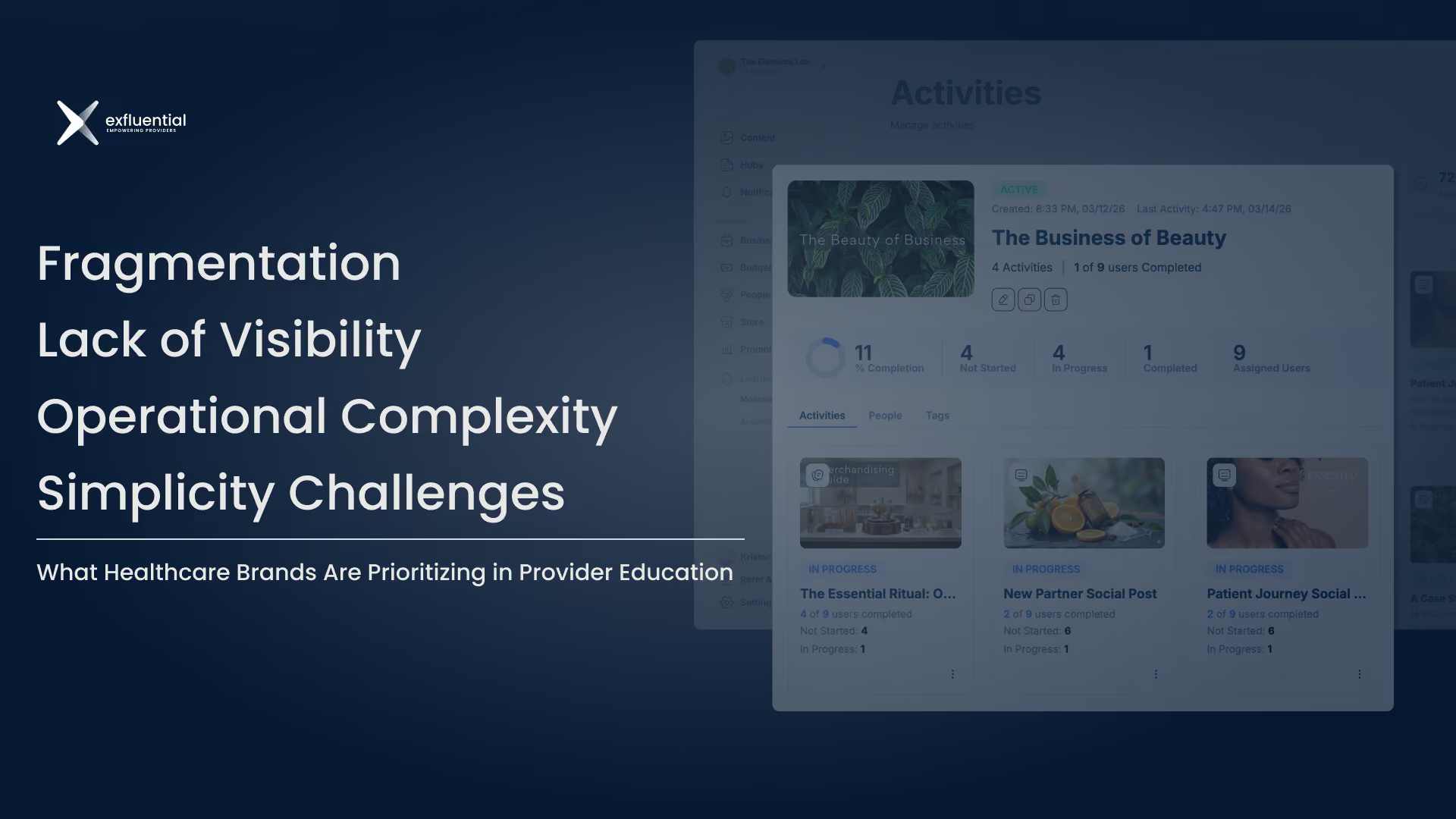
What Healthcare Brands Are Prioritizing in Provider Education
Over the past several months, our team has spoken with marketing, commercial, and education leaders across healthcare and aesthetics brands about how they support providers with training and educational resources.
While each organization approaches provider education differently, several consistent themes continue to emerge — particularly around fragmented systems, limited visibility into engagement, and the growing operational complexity of supporting large provider networks.
These challenges aren’t isolated. They reflect a broader shift in how brands are thinking about provider education — not just as training, but as a core part of provider engagement and growth.
Below are some of the key challenges and priorities brands are navigating today.
1. Fragmented Systems Are Creating Friction
One of the most common challenges is fragmentation.
Many teams manage provider education across a mix of systems, including:
- LMS platforms
- Internal portals
- Asset libraries
- Shared drives
- Marketing platforms
In some cases, teams even rely on generic platforms like Google Drive folders, YouTube or Vimeo links, and Dropbox shares simply because they are easier for providers to access quickly.
Even when strong educational content exists, accessing it isn’t always straightforward. Providers often have to log in to multiple sys between them just to piece together what they need.
When the experience becomes too complex, engagement drops.
As one leader described it:tems and switch
“Everything is spread out in five different places, and we have no clear view of what providers are actually using.”
2. Provider Education Is Becoming Part of the Engagement Strategy
Many organizations are rethinking the role provider education plays within their broader provider engagement strategy.
Rather than operating as a standalone function, education is increasingly being connected to:
- Onboarding
- Marketing activation
- Brand communication
- Ongoing provider support
Several leaders expressed interest in creating centralized destinations where providers can access educational resources, marketing materials, and brand content.
The goal is shifting: Not just delivering training — but creating a more cohesive provider experience.
3. Teams Lack Visibility Into Provider Engagement
Another recurring theme is limited visibility into how providers engage with educational content.
Many organizations distribute training materials, videos, and resources, but lack insight into what providers are actually using.
Without this visibility, teams struggle to understand:
- Which resources are driving engagement
- Which content is being overlooked
- Where additional education is needed
Without that visibility, teams are left making decisions without clear evidence of what’s actually driving provider engagement.
4. Lean Teams Are Managing Growing Operational Complexity
Marketing and education teams also highlighted the operational burden of supporting provider networks.
In many organizations, relatively lean teams are responsible for:
- Organizing educational content
- Responding to provider requests for training materials, marketing assets, and guidance
- Distributing marketing assets
- Coordinating training programs
As provider networks grow, these workflows become increasingly difficult to manage manually.
One brand manager summarized the challenge:
“Our sales reps are constantly asking for assets, and I feel like I’m always reacting instead of getting ahead of what providers need."
For lean teams, supporting providers often means coordinating across marketing, education, sales, and operations — stretching already limited resources.
5. Simplicity Drives Provider Adoption
Ease of access plays a critical role in whether providers engage with educational content but initial access is only part of the equation.
If systems require multiple logins, complex navigation, or lengthy onboarding processes, providers are far less likely to use them consistently. Even when they do access content once, a poor experience makes it unlikely they will return.
In many cases, providers gravitate toward the simplest option available even if it lacks structure or control because it fits more easily into their day-to-day workflow. And when training and resources are not easy to find or to keep top of mind, they quickly fall out of use altogether.
This is why the experience itself is becoming just as important as the content. It’s not just about getting providers in the door — it’s about giving them a reason to come back.
6. Consolidating Tools Improves Provider Experience
Across conversations, there is clear interest in consolidating the tools that support providers.
Rather than managing separate platforms for the provider:
- Education
- Marketing assets
- Communication
- Analytics and insights
Many teams are exploring ways to bring these capabilities together into a more streamlined system.
The shift towards tool consolidation is driven by two needs:
- Reducing operational complexity
- Improving the provider experience
A Shift in How Brands Think About Provider Education
These themes point to a broader evolution.
Provider education is no longer viewed as a standalone training function. It is increasingly becoming a core part of how brands engage, support, and activate their provider networks.
As provider ecosystems expand, organizations are looking for ways to simplify how education, content, and engagement come together — both for their providers and internal teams that support them..
What This Signals for the Future
While many of these challenges and priorities are operational, they point to a deeper structural issue in how provider education is delivered today — particularly in the systems used to support it.
As brands continue to scale their provider networks, there is growing recognition that existing approaches may not be enough.
👉 In our next post, we explore why traditional learning management systems fall short for provider networks and what needs to change.
Exfluential - Supporting Provider Networks at Scale
Exfluential’s Learning solution helps healthcare brands centralize provider education, marketing content, and provider engagement on a single platform.
Brands can manage training resources, distribute marketing materials, track provider engagement, and support their provider networks through a single branded environment designed for healthcare.
Top Reads


.avif)
.avif)